
How to Search Lafayette County Criminal Dockets
No single index holds every Lafayette County criminal docket. Begin with the agency that wrote the ticket or made the charge. Felonies are generally prosecuted in Circuit Court. Preliminary felony work, county misdemeanors, and traffic cases from the Sheriff, University Police, or Highway Patrol route through Justice Court. Oxford Police citations and city matters go to Oxford Municipal Court. For Circuit and County Court cases, the Lafayette County Circuit Clerk is the practical records contact. Each lower court keeps its own docket. The official Delta Circuit/County Court Case Search takes a party name, case number, styled party, date range, docket book and page, or file number. One caution applies. The page warns that its Circuit/County updates end February 26, 2024. So treat an older result as a lead rather than a current status. Newer electronic filings may sit in PAMEC/MEC, and a clerk-assisted request is the right fallback.
- Gather the case number if known, the person’s full name, the charge date, issuing agency, and likely court.
- Use the Circuit/County search for a likely Circuit or County case, entering one reliable field before adding refinements.
- For a newer electronic Circuit or County record, register with PAMEC/MEC and search only non-restricted material.
- Call or visit the Justice Court or Oxford Municipal Court clerk for matters those courts hold, especially when the online path has no result.
- Compare the court, case type, filing date, last event, and disposition before relying on a match.
Justice Court has a clerk line at 662-234-1545. Oxford Municipal Court's official materials list 662-232-2320. They also warn that new police charges may take up to seven business days to appear in the system.
Lafayette County Criminal Docket Search Routes
PAMEC is Mississippi's public window into participating MEC courts. Its non-attorney terms allow an account to view electronic docket sheets, documents, and notices in non-restricted cases. The account stays with its registrant. Automated collection and misuse are prohibited by the terms. Lafayette Circuit and County Court went live in MEC on February 26, 2024, which is the same date attached to the Delta currentness warning. That handoff is why both channels deserve a careful check. PAMEC's non-attorney access terms govern this Lafayette County criminal docket route.
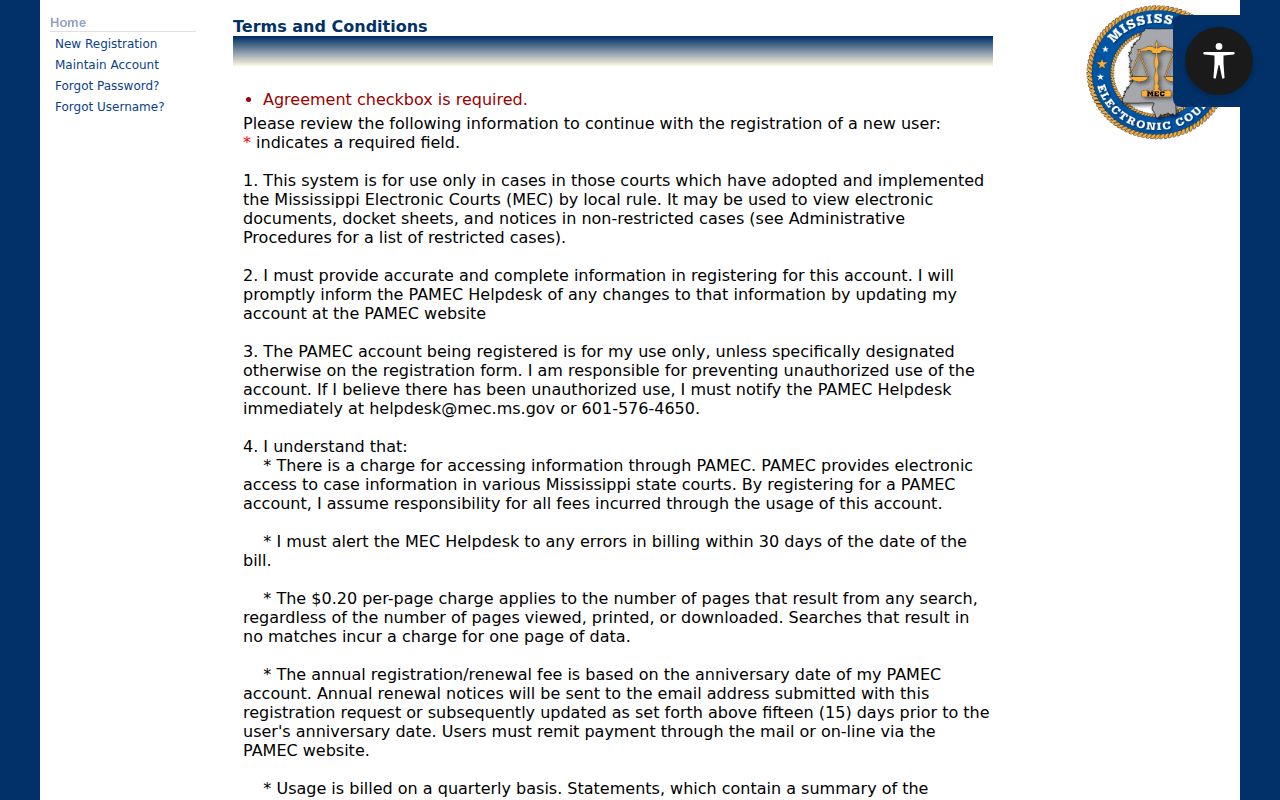
PAMEC bills $0.20 for each page a search returns, even a zero-match result. Registration materials also list a $10 annual non-attorney fee. That fee path is separate from a clerk's copy request.
What a Criminal Docket Shows
A Lafayette County criminal docket is an event history. It is not the full story of a case. Read each entry as a procedural record. The dependable field model comes from the official search controls, the Circuit Clerk's description of its work, and MEC's published flags. A single entry can show a case number, party or styled party, filed date, settings, motions, and disposition information. Not every filed document becomes public.
| Case or file number | The identifying number, file number, or docket book/page shown by the court. No local criminal prefix format was confirmed. |
|---|---|
| Party and charge record | A party name or styled party helps distinguish similar names; a charging entry identifies the procedural matter. |
| Setting | An arraignment, plea, pretrial, trial, sentencing, or other court event with its scheduled date. |
| Motion or order | A request to the court or an action entered by the court, which may change a future setting. |
| Disposition | The recorded result, such as dismissal, plea, verdict, judgment, or closure. Read the entry rather than inferring from a status label. |
Note: A docket entry can show a pending event while the clerk's final-outcome record shows a different, later result.
Lafayette County Criminal Docket Court Routes
Match the agency to the court before running any name search. Justice Court handles preliminary felony charges, county misdemeanors, and the specified traffic sources outside Oxford. A felony may begin there for a preliminary stage. It can later proceed in Circuit Court. County Court holds limited criminal authority, including search warrants, bond setting, and preliminary hearings. Read the court named on the notice. Not every Lafayette County criminal docket is a Circuit Court case. Lafayette County Justice Court's official jurisdiction page sets out this criminal-docket routing.
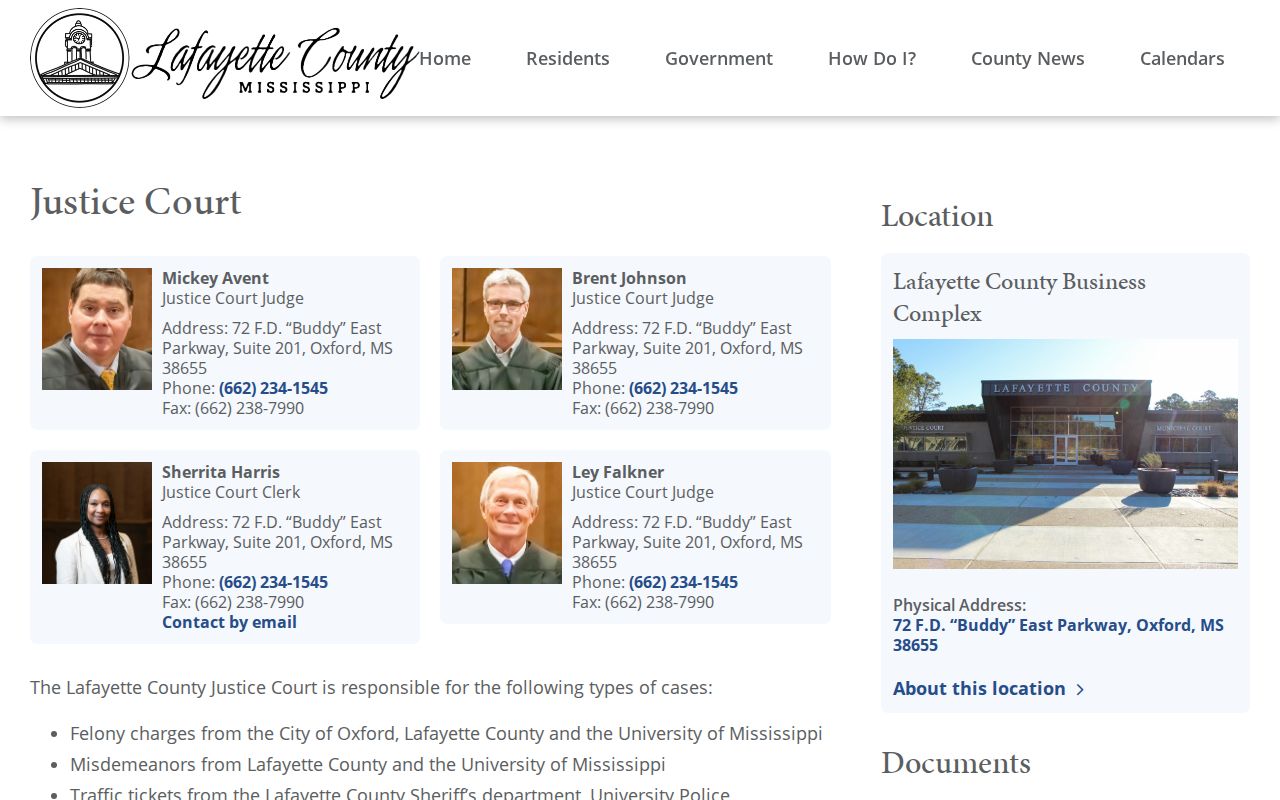
The Justice Court page lists traffic tickets among its work. That gives a direct route for the listed county and university cases. Oxford Police traffic citations instead go to Oxford Municipal Court.
Stages on a Criminal Docket
Case order varies by court and by charge. A Lafayette County criminal docket can record a citation or charging affidavit, an initial appearance or arraignment, bond activity, a preliminary hearing, a bind-over, indictment or information, motions, a pretrial conference, trial or plea, disposition, sentencing, probation activity, payment, and closure. Watch for movement between courts. A preliminary Justice Court event does not mean the whole case stays in Justice Court.
Docket flow: Filing or Charge → Arraignment → Pretrial → Plea or Trial → Disposition → Sentencing
A final disposition deserves separate attention. The Circuit Clerk identifies final outcomes and disposed cases among its records. A charge, an arrest-related event, or a pending flag is not the same as a final result.
Lafayette County Criminal Docket Status Flags
MEC publishes status terms that can attach to a Lafayette County criminal docket. "Arraignment Pending," "Plea Pending," and "Trial Pending" mean procedural work still lies ahead. "Probation" or "Probation Viol Pend" flags a status area. It needs the underlying entries for context. Treat "Capias Pending" and "Bench Warrant Issued" as court flags. They are not a license to speculate about a person or a current outcome.
- BOUND OVER
- A preliminary criminal posture that indicates movement toward a higher court process.
- Nolle Pros Pending
- A pending prosecution-status label that must be read with the later docket entry or order.
- CLOSED
- An administrative closure marker; the disposition entry explains what closed and how.
- SEALED
- An access flag requiring the searcher to stop and use the clerk or controlling order for guidance.
These labels establish no guilt, innocence, or custody status, and they are not legal advice. Confirm a current setting or final result with the court that maintains the original record.
Which Court Holds Criminal Dockets
Lafayette County felony prosecutions land in Circuit Court. That court is the county's main criminal trial court of general jurisdiction. Certain appeals from local courts arrive there too. County Court is a different animal. Created in 2023, it handles limited criminal matters. A case may carry a County Court label even though the Circuit Clerk and the MEC system remain the practical routes to the record. When in doubt about which court holds a Lafayette County criminal docket, the clerk can sort it out quickly.
The official Lafayette County Circuit Court page sets out the court's criminal docket work.
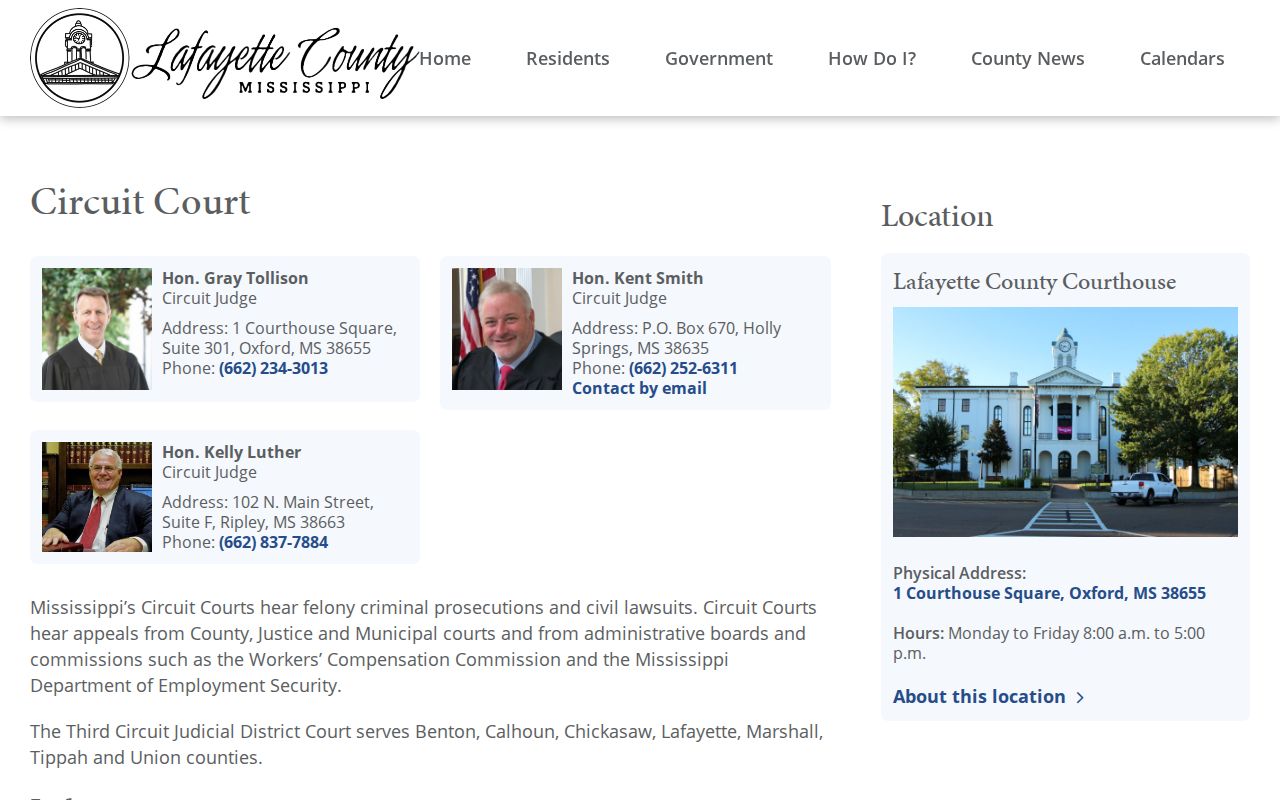
So the Circuit Court record is where to look once a felony reaches circuit-level prosecution. A search result can still be ambiguous. Ask the clerk whether a match belongs to Circuit Court or County Court before you rely on it.
Lafayette County Drug Court Program Docket
The Third Circuit District Drug Intervention Court is not a general criminal name-search category. It is a specialized Lafayette County program docket. According to the county, the program serves seven Third Circuit counties and takes drug-related felony cases referred by the District Attorney and approved by program staff. Violent crime plus drug-related crime is excluded. Participants enter a minimum three-year rehabilitation program. A weekly judge-led docket call is open to the public, an unusual feature for a Lafayette County criminal docket setting.
The county's Drug Court information describes the program's entry rules and docket call.

The county reports that successful completion leads to most charges being completely expunged. Treat that as a program description. It is not a promise of eligibility, completion, or any individual outcome.
Public Access and Sealed Criminal Dockets
Mississippi law gives you the right. The Public Records Act of 1983 covers inspecting, copying, or obtaining non-exempt public records. That right stops at court confidentiality rules, sealing orders, youth protections, and MEC privacy requirements. So a Lafayette County criminal docket can be public. Its underlying investigative file can stay closed. PAMEC adds its own limit, allowing non-attorneys into non-restricted cases only. When a search result is missing, the cause may be a restriction. It could also be a stale index, a legacy record, or simply the wrong court.
Access limits matter. The Mississippi Ethics Commission’s Public Records Act summary explains that exempt material should be redacted where possible and that a written denial should identify the exemption.
Youth, sealed, expunged, and child-related material requires special care. Do not republish a restricted entry or try to bypass a permission notice.
Facing a restricted result? Ask the appropriate clerk whether a docket sheet, order, judgment, or proof of disposition is lawfully available. Supply the court, the case number if already displayed, an approximate date, and the document type you want.
Lafayette County Criminal Docket Copies
Once you have pinned down the right case online, the Lafayette County Circuit Clerk holds the actual record. That covers Circuit or County Court. Make the request easier by having a few details ready. Give the court division first. Then give the case number or full party name, the rough year, and the document you want. Say whether you need a plain copy or a certified one. The current Circuit/County fee schedule sets the charges. Plain copies run $1 per page. Certified ones cost $2.50 per copy, and civil or criminal research is $10. Pay in cash or money order only. For a big request, ask the clerk for an estimate first.
The Circuit Court payment service is the official source. It backs this Lafayette County criminal docket information.
Paying a fee and requesting a court record are separate steps. Before sending money, check details with the clerk. Confirm the amount, the accepted method, the court, and the purpose. An online payment screen is not a docket disposition.
Note: A certified copy carries clerk certification from the clerk's office. A plain copy does not. State which form you need when making the request.
Lafayette County Criminal Docket County Court
County Court opened in Lafayette County on January 1, 2023. The county had crossed the population threshold set by the 2020 Census. Its official description covers limited criminal work. That includes search warrants, bond setting, preliminary hearings, youth matters, eminent domain, civil jurisdiction, and appeals from lower courts. County Court and Circuit Court are distinct courts. Their electronic records share a local search history. Always read the court name printed at the top of any case notice. The label still matters when you pull a Lafayette County criminal docket.
The official Lafayette County Court page details the court's criminal docket duties.
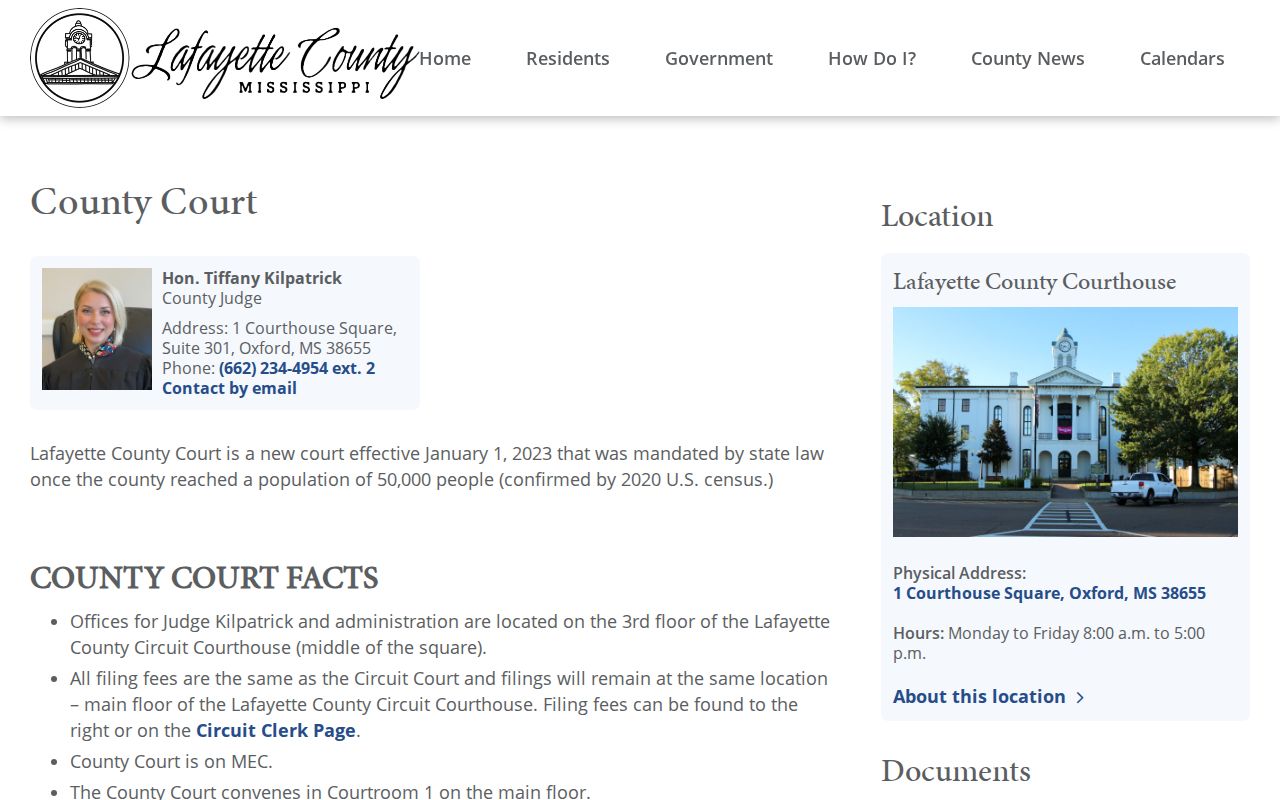
County Court runs on MEC. It convenes in Courtroom 1 at the Circuit Courthouse. Its shared filing and clerk relationship with Circuit Court is exactly why you should verify the court-specific label before requesting or reading a Lafayette County criminal docket.