
How to Get Lafayette County Court Records
Begin with the clerk who keeps the file. The Lafayette County Circuit Clerk holds Circuit Court records and is the practical access point for County Court. The Lafayette County Chancery Clerk holds Chancery records and public land records. Current Circuit and County electronic records use Delta or MEC as appropriate; Chancery court documents use MEC, while Delta remains a land-record system for that office. Justice and municipal matters require their own court clerk.
- Identify the court, case number or party names, approximate year, and document sought.
- Use Delta or MEC for available electronic Circuit, County, or Chancery material.
- Call or visit the correct clerk for a current status, a paper file, a certified copy, or a restricted-record question.
- Mail the request only after confirming the clerk’s preferred delivery and fee procedure.
- Ask whether the copy should be plain, certified, authenticated, microfilm, or archival material.
Lafayette County Clerk Record Routes
The Lafayette County Circuit Clerk is at 1 Courthouse Square, Suite 101, Oxford, Mississippi 38655, and lists 662-234-4951. The office is open Monday through Friday, 8 a.m. to 5 p.m. The Chancery Clerk is at 300 North Lamar Boulevard, Oxford, Mississippi 38655, with 662-234-2131. Both offices are distinct custodians, so a Chancery probate or domestic-relations file should not be sent to the Circuit Clerk.
Lafayette County Circuit Clerk
1 Courthouse Square, Suite 101
Oxford, MS 38655
662-234-4951
Justice Court and municipal clerks keep their own local records. Ask for the court, case type, and date before placing a request.
Types of Lafayette County Court Records
A docket is an index and event history. The case file behind it can contain records from the opening paper through post-judgment enforcement. The Circuit Clerk’s description includes appearance, subpoena, execution, judgments, disposed cases, and final outcomes. Naming the document directly helps the clerk locate the correct Lafayette County court record.
- Docket sheets and case summaries.
- Complaints, petitions, affidavits, motions, and responses.
- Orders, judgments, proof of service, and appeal papers.
- Transcripts and exhibits when separately available.
- Post-judgment execution, garnishment, or satisfaction records.
What a Lafayette County Court Record Contains
The docket line points to the document; it does not replace it. A case file can include an initiating complaint or petition, summons, affidavits, motions, responses, exhibits, orders, judgments, transcripts, proof of service, financial statements, appeals, and post-judgment papers. The exact materials depend on the court and matter.
| Case number | The identifier that lets the clerk locate a Lafayette County court file. |
|---|---|
| Pleadings | Initiating papers, motions, answers, and responses. |
| Orders and judgments | Signed rulings and final decisions. |
| Docket sheet | Chronological filing and event entries. |
| Exhibits | Filed attachments, subject to access restrictions. |
Lafayette County Archived Court Records
Online access is not the only Lafayette County court-record route. The Mississippi Department of Archives and History finding aid covers Lafayette County records from 1830 to 1976 and lists Circuit Court Papers for 1860 to 1869 in volume 1, box 10055, without an index. That is an archival lead, not proof that every file for those years is in that box.
Ask whether an older record is held by the courthouse, Circuit Clerk, Chancery Clerk, MDAH, or a microfilm room. The MDAH county microfilm catalog is another official path for historic research. A Lafayette County digital-archive image helps show why historic searches may require a finding aid rather than a name box.
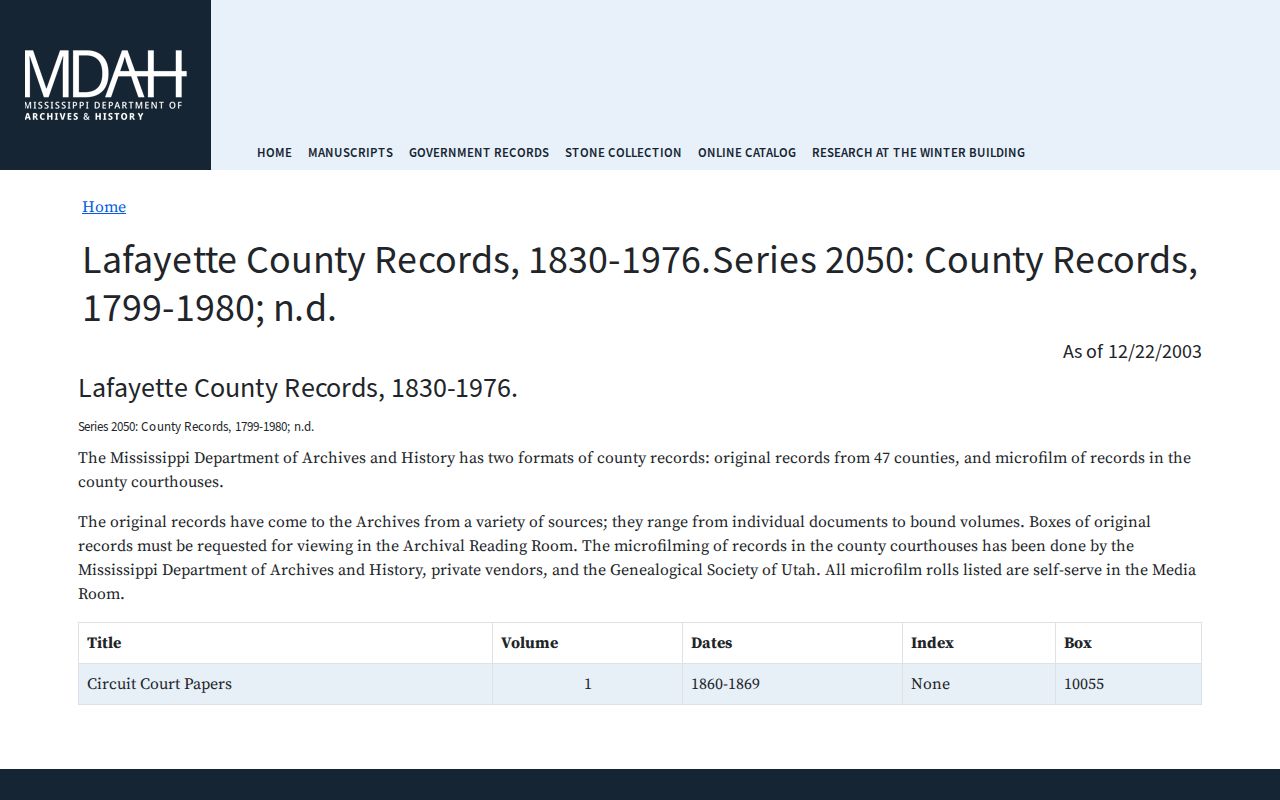
Historic records can be paper, bound volumes, microfilm, or archival boxes rather than downloadable case documents.
Certified Copies and Fees
The current Lafayette Circuit/County fee schedule lists plain copies at $1 per page and certified copies at $2.50 per copy. Certification is the clerk’s authentication of the copy; it is not a statement that the underlying facts are true. The same schedule lists $5 authentication of record and $5 certification as to an act of Congress, showing why a requester should name the needed copy type.
| Item | Amount |
|---|---|
| Plain copy | $1 per page |
| Certified copy | $2.50 per copy |
| Authentication of record | $5 |
| Certification as to an act of Congress | $5 |
Lafayette County Circuit Clerk
1 Courthouse Square, Suite 101
Oxford, MS 38655
662-234-4951
Lafayette County Plain and Certified Copies
Use a plain copy when a readable court document is sufficient. Ask for a certified copy when the recipient specifically requires clerk certification. If the request concerns an exemplified record, authentication, transcript, appeal record, or a large set of documents, ask the clerk for the correct category and an estimate before payment. Court-specific charges can differ from general public-record duplication costs.
A screenshot tied to the official Mississippi law reference provides context for Lafayette County record access under state law.
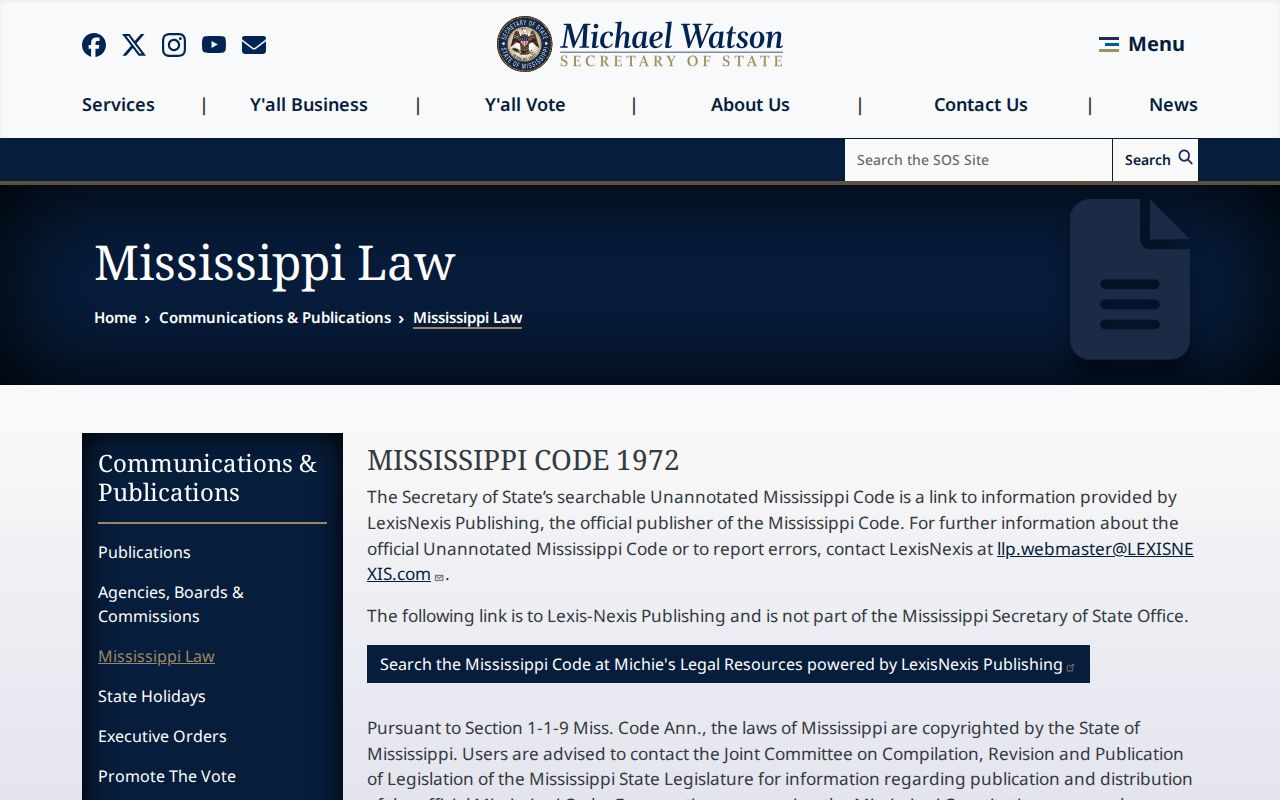
The clerk’s procedure and the applicable court rule remain important even when general public-record law applies.
Lafayette County Public and Sealed Records
The Mississippi Public Records Act of 1983 recognizes a right to inspect, copy, or obtain non-exempt public records. It also recognizes redaction where possible. Court-specific confidentiality statutes, sealing orders, youth protections, and MEC privacy provisions can control a particular Lafayette County court record. Sealed, expunged, youth, and protected personal information should not be republished from an index.
Key Rules:
Mississippi Public Records Act, §25-61-5 explains access timing and written explanations when a record cannot be produced promptly.
Mississippi Public Records Act, §25-61-7 permits actual reasonable search, review, duplication, and mailing costs.
Mississippi Rule of Civil Procedure 5.1 requires privacy safeguards for electronic court records.
Lafayette County Digital Record Privacy
MEC privacy procedures protect items such as Social Security numbers, tax identification numbers, dates of birth, minor names, financial-account numbers, and home addresses. The Chancery Clerk’s MEC information gives the same warning. A public docket may identify an event while the document is restricted, redacted, or unavailable to an account.
An official Rule 5.1 image reinforces that Lafayette County electronic court access is governed by privacy rules as well as search tools.
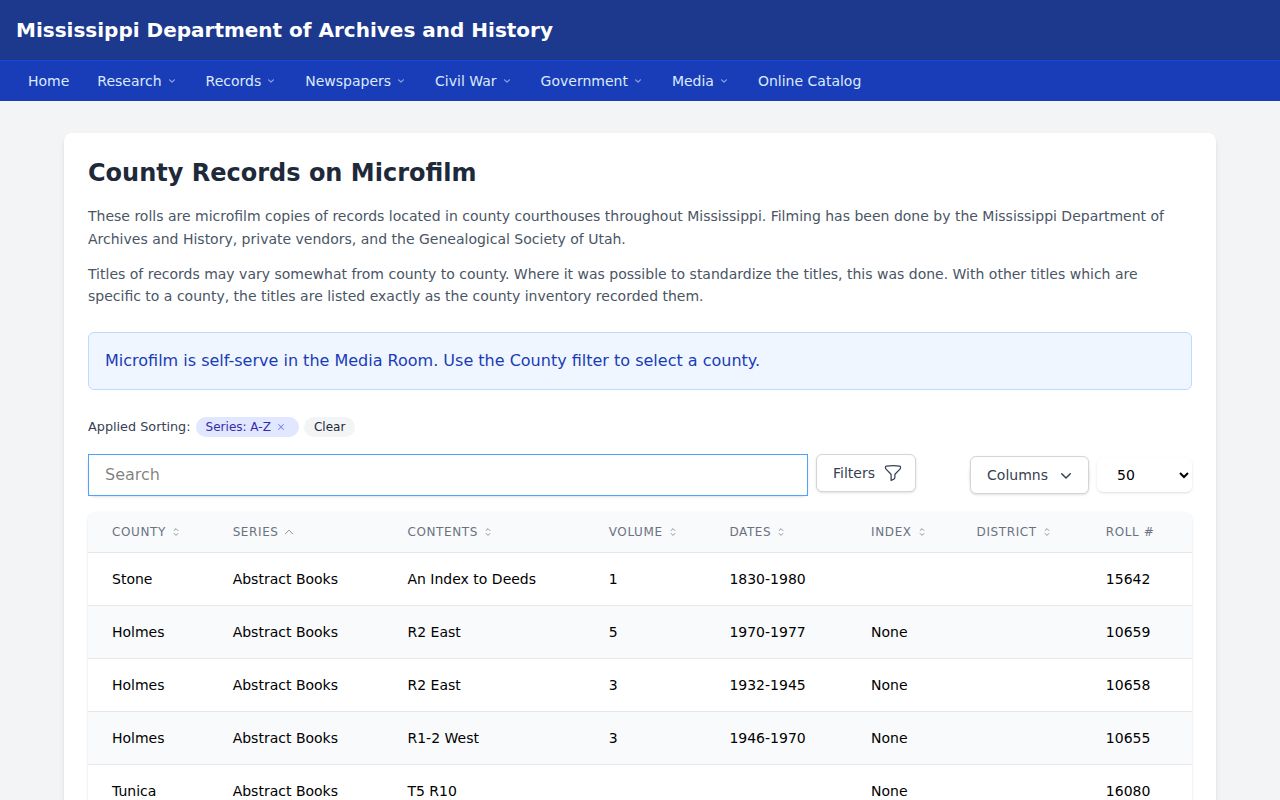
Ask the custodian whether a lawful redacted version is available instead of trying to reconstruct restricted content.
Lafayette County Records Request Details
A clear request reduces follow-up. Give the court division, full case number if known, party names or case style, filing or disposition year, document title, and the requested copy type. State whether electronic delivery, a paper copy, a certified copy, MEC retrieval, microfilm, or archival research is acceptable. For a large request, ask for a fee estimate before the clerk begins searching or duplicating.
The Mississippi Public Records Act allows actual reasonable search, review, duplication, and mailing costs. Its general timing language does not promise a one-day response for a complex court-file or archival request. The custodian must reconcile the statute, court procedure, access limitations, and the material requested. A clerk can explain procedures, forms, location, payment, and availability, but cannot give a legal strategy.
For a Circuit or County matter, the local Delta form may help establish a number or style before a clerk request. Its February 26, 2024 update warning makes MEC or clerk confirmation important for a recent case. Chancery court documents follow the Chancery MEC channel. Justice Court and municipal courts have separate clerk records, and a traffic record should go to the court named on the citation.
The official Lafayette digital-archive route illustrates that older records can require a different search method from a current electronic case.
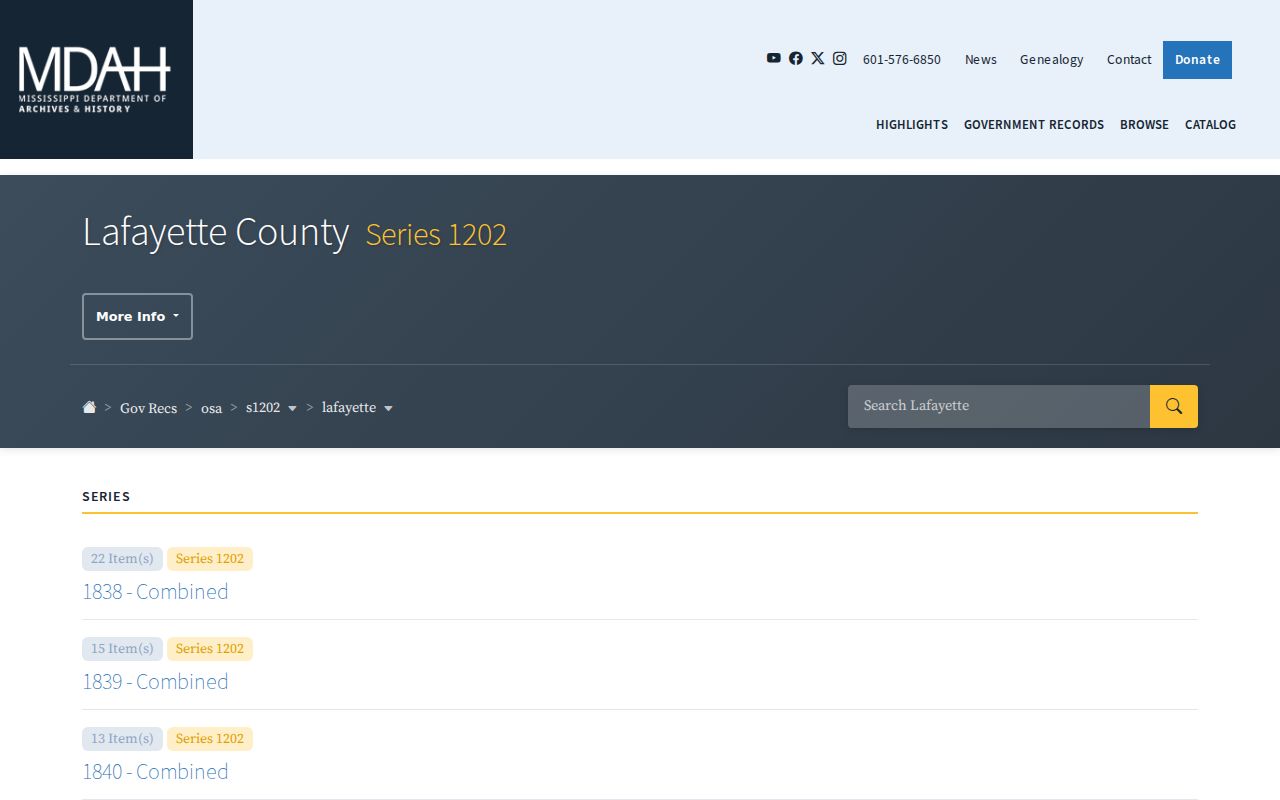
When the record is historic, ask the custodian where the original series, microfilm, or finding aid is held before assuming an online name search is complete.
Note: A written denial should identify the exemption, while a redacted copy may be possible when an accessible portion can be separated.
Lafayette County Court Record Follow-Up
Before relying on a copy, compare it with the case number, court division, document title, and date requested. A docket index can show that a filing exists while the clerk’s copy request identifies the signed version, certification status, or restrictions that apply. This is especially useful when an old Delta result does not reflect the current electronic history.
For a Circuit or County matter, the Circuit Clerk can explain the local copy route. For Chancery, use the Chancery Clerk and MEC channel. For a municipal or Justice Court matter, contact the clerk for that court. The requester’s best next step is a narrow, court-specific question rather than a broad demand for every record bearing a name.